Rooftop PV must keep firefighter access pathways and setbacks under the International Fire Code, and it must include rapid shutdown per NEC (NFPA 70) 690.12 so responders can de-energize conductors. A common target is a 3-foot-wide access pathway along at least one axis and a setback below the ridge, though exact dimensions vary by jurisdiction and the code edition your AHJ has adopted. Rapid shutdown also requires labeling at the point of disconnect, so plan the layout and the plan-set markings together, not after the fact.
Key takeaways
- Fire access pathways and ridge setbacks come from the International Fire Code and vary by AHJ, so confirm the adopted edition before you commit a layout.
- A 3-foot access pathway and a ridge setback are typical starting points, but treat every dimension as subject to local amendment.
- NEC 690.12 requires rapid shutdown to de-energize conductors for responder safety, and the labeling is part of compliance.
- Most fire rejections trace to missing pathways, an absent ridge setback, or rapid-shutdown labeling left off the plan set.
- Design setbacks and labeling into the layout from the start to protect module count and production.
- Why rooftop layouts keep failing fire review
- Fire access pathways: what the IFC asks for
- Ridge and hip setbacks, explained
- NEC 690.12 rapid shutdown in plain terms
- Rapid-shutdown labeling and plan-set marking
- Fire and electrical requirements at a glance
- Laying out an array that passes and still produces
- Common mistakes that trigger a fire rejection
- Pre-submittal fire and rapid-shutdown checklist
- Keeping setbacks and labeling in the plan set
Why rooftop layouts keep failing fire review
You spaced the modules cleanly, hit the kilowatt target, and sent the set to the city. Then the fire reviewer bounces it. Three reasons come up again and again: the access pathway is too narrow or missing, the ridge setback was never drawn, or the rapid-shutdown labeling is nowhere in the plan set. None of these are hard to fix once you know the review runs on two separate rulebooks. Fire access rules come from the fire code, and the electrical safety rules come from the National Electrical Code. Miss either one and the layout stops at the counter.
The frustrating part is that these requirements are predictable. A reviewer is not guessing. They are checking your roof plan against the code edition their jurisdiction adopted, and they want to see pathways, setbacks, and labels called out before they sign. The DOE has funded tooling like SolarAPP+ to standardize this kind of permit review, which tells you how repeatable the checks have become. If your layout accounts for them up front, most of the back-and-forth disappears.
Fire access pathways: what the IFC asks for
Access pathways are clear lanes across the roof that let firefighters move, vent, and cut without walking through live modules. They come from the International Fire Code, which most jurisdictions adopt with local amendments. The idea is straightforward. Crews need a way to reach the ridge and a way to work along the roof planes during a fire.
A pathway is commonly specified as 3 feet wide along at least one axis of the roof, and often along both the ridge and the eaves for larger arrays, but that width and where it must run are subject to local code and the edition your AHJ enforces. Some jurisdictions ask for wider lanes on commercial roofs. Others tie the requirement to roof size or the number of pathways. Because the fire code is adopted and amended locally, the safe move is to confirm the exact rule with the authority having jurisdiction before you finalize spacing, rather than assuming a single national number.
What stays constant is the intent. The pathway has to be continuous and usable, not a gap you can point to on paper that a crew could not actually walk. When you draw one, make it obvious on the roof plan with dimensions, so the reviewer does not have to hunt for it.
Ridge and hip setbacks, explained
A ridge setback is the strip of clear roof left below the ridge line so crews can cut a ventilation opening at the peak. On a typical pitched residential roof the fire code calls for a setback measured down from the ridge, frequently cited around 18 inches on each side, though this is exactly the kind of dimension that varies by jurisdiction and by the code edition in force. Some AHJs reduce or waive the ridge setback when other conditions are met, such as arrays that do not span the full roof or roofs with alternate access. Treat any number you have memorized as a starting point, not a guarantee.
Setbacks also show up around roof edges, valleys, and hips depending on local rules. The practical effect on your design is the same in every case: usable roof area shrinks, and the modules have to fit inside the remaining envelope. That is why setbacks belong in the layout from the first sketch. Adding modules first and carving setbacks out later is how you end up short on production and back in the review queue.
NEC 690.12 rapid shutdown in plain terms
Rapid shutdown is the electrical side of firefighter safety. Under the National Electrical Code, published by NFPA as NFPA 70, section 690.12 requires a way to quickly de-energize the conductors of a PV system so that responders on a roof are not exposed to live DC wiring during an emergency. The rule limits the voltage that can remain in the array and in the conductors leaving it after the shutdown is triggered, within a set time. The NEC is the reference standard here, and it is worth checking which edition your jurisdiction has adopted, since the specifics have changed across code cycles.
NFPA develops the National Electrical Code, NFPA 70, as a consensus safety standard for electrical installations, and jurisdictions adopt it to govern how PV and other systems are wired and de-energized.
NFPA, Understanding NFPA 70 (National Electrical Code)
In practice, rapid shutdown is handled with module-level electronics or equivalent equipment that drops conductor voltage when the system is shut off. Your job as the designer is to specify compliant equipment and show, on the single-line diagram and the roof plan, how the shutdown is initiated and where the boundary sits. The exact requirement comes straight from the adopted edition of NFPA 70, so cite it in the notes and match your equipment to it.
Rapid-shutdown labeling and plan-set marking
Labeling is where a lot of otherwise clean designs stumble. Rapid shutdown is not only about the hardware. The code requires marking that tells a responder the system has rapid shutdown and where the initiation device is. That means a label at the service disconnect or the initiator, and it means the label and its location have to appear in the plan set the reviewer sees. If the hardware is compliant but the labeling is missing from the drawings, the set still fails.
Because this is an NFPA electrical requirement rather than a fire-access one, it lives with your electrical drawings and notes, not the roof geometry. Attribute it correctly in your submittal. Keeping the rapid-shutdown label callout, the initiation device, and the single-line diagram consistent is a small step that removes a common rejection. A responder should be able to read the roof and the disconnect and understand how to make the array safe.
Fire and electrical requirements at a glance
The table below lines up the main requirements against a typical rule and where the rule tends to change. Use it as a map, then confirm the specifics against your adopted codes.
| Requirement | Typical rule (verify locally) | Source / enforcer | Where it varies |
|---|---|---|---|
| Roof access pathway | Commonly 3 ft wide along at least one axis | International Fire Code / local fire AHJ | Width and count change with roof size and local amendments |
| Ridge setback | Often around 18 in below the ridge, each side | International Fire Code / local fire AHJ | May be reduced or waived by roof type and access |
| Edge and valley clearance | Setback from eaves, valleys, hips as specified | International Fire Code / local fire AHJ | Depends on roof geometry and adopted edition |
| Rapid shutdown | De-energize conductors to a safe level after trigger | NEC (NFPA 70) 690.12 | Voltage and boundary limits differ by code edition |
| Rapid-shutdown labeling | Marking at initiator/disconnect, shown on plans | NEC (NFPA 70) 690.12 | Label wording and placement per adopted edition |
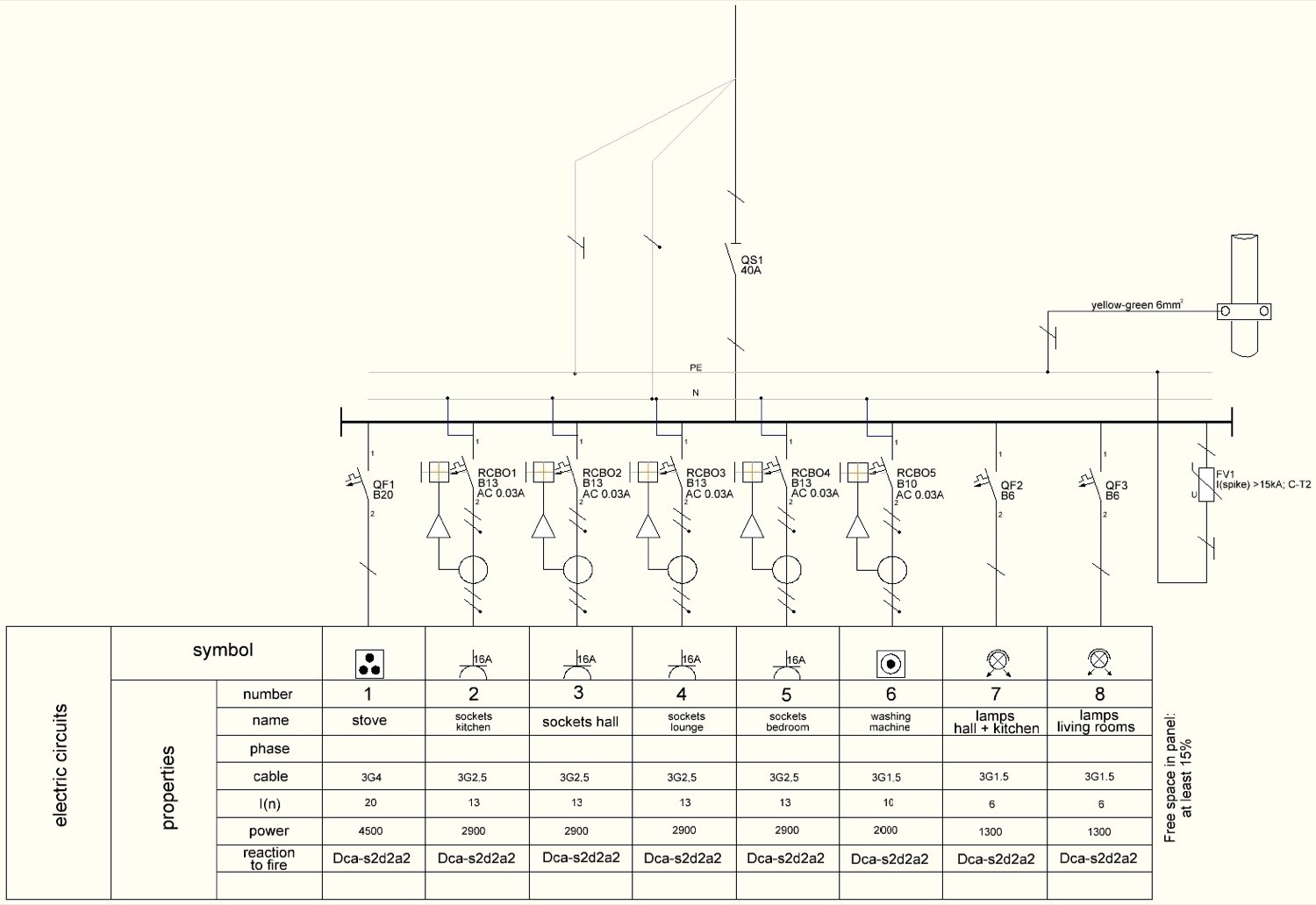
| Single-line diagram | Shows shutdown method and system boundary | NEC (NFPA 70) / building AHJ | Detail expected varies by jurisdiction |
Laying out an array that passes and still produces
The tension in every rooftop job is the same. Fire setbacks take away roof area, and you still have a production number to hit. The way to win is to treat the setbacks as fixed boundaries and design the modules inside them, instead of the other way around. Start by drawing the ridge setback, the access pathway, and any edge clearances the local code calls for. Whatever is left is your buildable area.
From there, you can recover production without touching the pathways. Higher-efficiency modules pack more watts into the same buildable area, and the DOE explains how module efficiency drives output per square foot. Reorienting rows to follow a roof plane can open up a cleaner pathway while keeping module count. On complex roofs, splitting the array across two planes sometimes yields more usable area than forcing one large block that eats into a setback. The DOE's Solar Energy Technologies Office and its homeowner guidance both frame the same tradeoff: usable roof and orientation set the ceiling on what a system can generate.
The point is to iterate on the layout with the setbacks already in place. When the boundaries are drawn first, every module you place is one you can defend at review.
Common mistakes that trigger a fire rejection
Most fire rejections are not exotic. They repeat. If you check your set against this list before you submit, you will clear the ones that cost the most time.
- No access pathway drawn. The modules fill the roof and there is no continuous clear lane. Reviewers cannot approve what they cannot see, so dimension the pathway explicitly.
- Ridge setback missing or too small. Modules run right to the peak. Draw the setback per the adopted fire code and label the dimension.
- Rapid-shutdown labeling absent from the plan set. The hardware is compliant but the marking never made it onto the drawings, so the set fails on the NEC side.
- Wrong code edition assumed. You used a national number, but the AHJ enforces an amended version with different setbacks. Confirm the adopted edition first.
- Setbacks added after the layout. Modules were placed first, so carving out pathways later dropped the system below its production target and forced a redesign.
- Single-line diagram out of sync. The roof plan shows one shutdown boundary and the electrical drawings show another. Keep them consistent.
Pre-submittal fire and rapid-shutdown checklist
Run this before every rooftop submittal. It maps to the two rulebooks the reviewer uses.
- Confirm the fire code edition and any local amendments the AHJ has adopted.
- Draw and dimension the access pathway along the required axis or axes.
- Draw and dimension the ridge setback, plus any edge, valley, or hip clearances.
- Verify the buildable area still supports the target module count and production.
- Specify rapid-shutdown equipment that meets the adopted edition of NEC 690.12.
- Place rapid-shutdown labeling on the plans at the initiator and disconnect.
- Match the single-line diagram to the roof plan for the shutdown boundary.
- Note the code references, NFPA 70 for the electrical side and the fire code for access, in the plan set.
Keeping setbacks and labeling in the plan set
The problem is that setbacks and labeling live in different parts of the workflow, and it is easy to nail one and forget the other. That is where design software earns its keep. PVSketch lets you lay out arrays with setbacks and obstructions in mind from the first pass, so the ridge setback and access pathway are boundaries you design inside, not surprises you discover at review. You see the buildable area and the module count together, which is exactly the tradeoff this article is about.
On the electrical side, PVCAD produces NEC-compliant construction documents, including rapid-shutdown labeling and single-line diagrams. That keeps the 690.12 marking on the plans and keeps the shutdown boundary consistent between the roof plan and the electrical set. Draw the setbacks in the layout, generate the labeled documents from the same design, and the two rejections that cost you the most, missing pathways and missing labels, are handled before the set ever reaches the counter.
Frequently asked questions
What are solar fire setbacks?
Solar fire setbacks are clear areas the fire code requires you to leave around and within a rooftop array so firefighters can access, move across, and ventilate the roof. They include access pathways and a setback below the ridge. Dimensions come from the International Fire Code and vary by jurisdiction, so confirm the adopted rules for your local permit process before finalizing a layout.
What is rapid shutdown for solar?
Rapid shutdown is a required function that quickly de-energizes a PV system's conductors so first responders are not exposed to live wiring during an emergency. It is defined in the National Electrical Code, published by NFPA as NFPA 70, in section 690.12, and it applies to most rooftop systems.
How wide does a solar access pathway need to be?
A pathway of about 3 feet wide along at least one axis is a common target, but the exact width and how many pathways you need depend on the code edition and local amendments your fire AHJ enforces. Because permit requirements are set locally, verify the number with your jurisdiction rather than relying on a single national figure.
Does rapid shutdown require labeling?
Yes. NEC 690.12 requires marking that identifies the rapid-shutdown function and its initiation point, and that labeling has to appear in the plan set the reviewer sees. Missing labels are a frequent rejection even when the hardware is compliant, so pull the requirement from the adopted edition of NFPA 70 and show it on the drawings.
How do I keep production up after subtracting fire setbacks?
Design the setbacks first, then fit modules inside the remaining buildable area, and recover watts with higher-efficiency modules or better row orientation. The DOE explains how module efficiency raises output per square foot, which helps you hit a target on a smaller footprint. Tools like PVSketch let you lay out arrays with setbacks in mind so you see module count and buildable area at once.
Why did my rooftop PV layout fail fire review?
The usual causes are a missing or too-narrow access pathway, an absent ridge setback, or rapid-shutdown labeling left off the plan set. The first two come from the fire code and the third from NEC 690.12. Generating NEC-compliant documents from your design, for example with PVCAD, which produces rapid-shutdown labeling and single-line diagrams, closes the most common gaps.